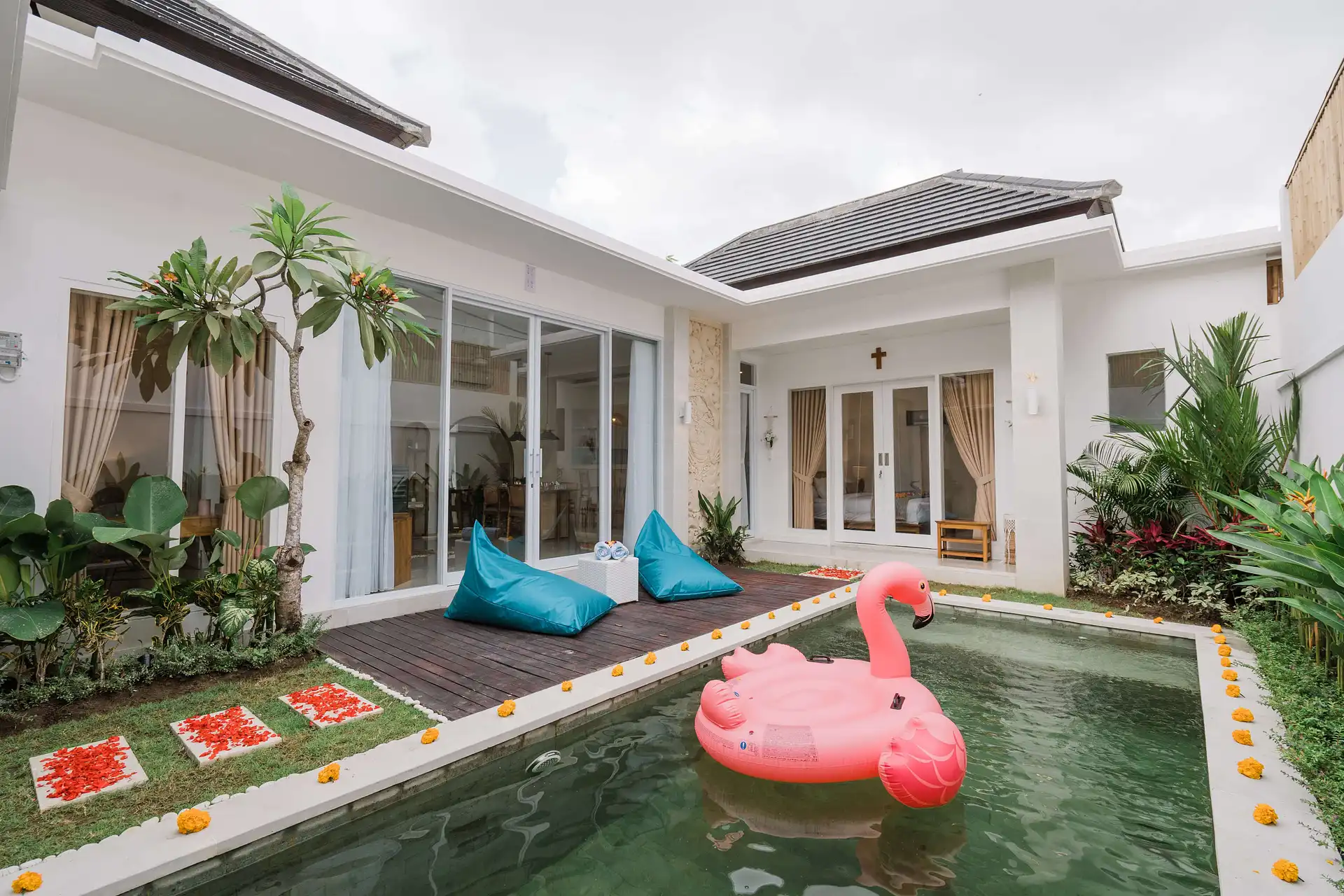
The dream of building a luxury villa in Bali is undeniably powerful. For foreign investors, the prospect of owning a slice of paradise that generates double-digit returns is the ultimate goal. However, many new investors are easily captivated by glossy architectural renderings while completely overlooking the harsh realities of a tropical environment.
In Bali, the villas that truly last don't just try to impress aesthetically—they are built to survive. Some properties look flawless at handover, but after just a few rainy seasons, their imported finishes fail, rooms trap heat, and maintenance quietly eats away at the profit margins. If you are looking to build a profitable villa in 2026, understanding climate-resilient design is no longer just an architectural preference; it is the ultimate deciding factor for your Return on Investment (ROI).
The 4 Silent Destroyers of Bali Villas
Bali’s tropical paradise comes with hidden environmental challenges that can devastate unprotected properties and severely inflate your operational expenses. When planning your villa's design, your architectural team must actively engineer solutions against the four primary tropical threats:
Tropical Humidity & Mold: Bali has an average humidity level of 85%, which drastically accelerates wood rot and creates the perfect breeding ground for mold. Mold growth inside AC systems and wardrobes is a frequent guest complaint that can ruin your villa's online ratings.
Salt Corrosion: If you are building in coastal hotspots like Uluwatu or Canggu, be aware that coastal properties experience three times faster metal degradation. If untreated, the risk of electrical system failures increases by 40% due to airborne salt.
Subterranean Termites: Bali's subterranean termite colonies are incredibly aggressive. A single colony can consume up to 1kg of wood daily, and undetected infestations have been known to cause complete structural collapse in wooden elements.
Monsoon Rains: Torrential monsoon rains will aggressively test the integrity of your waterproofing and site drainage. In fact, 70% of roof leaks in Bali originate from poorly designed or clogged drainage systems.
Smart Execution: Why Local Materials Outperform Imports
A common mistake foreign developers make is importing Western architectural trends without adapting them to the equator. Glass-heavy builds act like greenhouses, trapping heat and forcing your air conditioning units to work in overdrive, massively inflating your electricity bills. Similarly, expensive imported finishes often fail to cope with the constant expansion and contraction caused by Bali's humidity.
Instead, successful builds prioritize airflow, deep roof overhangs to protect walls from driving rain, and durable local materials. Simple, locally sourced, and repairable materials installed with high-level execution will consistently outperform expensive imported finishes.
Furthermore, you must design for the current market demand. Gone are the days of sprawling, massive estates being the default. Today, "compact is king." One- and two-bedroom properties now dominate both the listings and the sales volume in Bali. Designing a highly optimized, beautifully detailed two-bedroom villa will yield much better capital efficiency and liquidity than a large, difficult-to-maintain six-bedroom compound.
The 2026 Eco-Luxury Mandate: Sustainability Meets Tech
The definition of luxury in Bali has evolved. Sustainability is no longer a niche preference; it is a market expectation driven by discerning international travelers and tightening government regulations. Recent environmental regulations now heavily encourage—and in some cases require—developers to incorporate rainwater harvesting, solar power, and proper waste management systems in new constructions.
Integrating these systems during the design phase is an investment that pays massive dividends. Data shows that environmentally conscious, sustainable luxury villas can command 15% to 20% higher prices than conventional, non-green properties. Furthermore, eco-certified villas that utilize hybrid solar systems, premium water filtration, and certified sustainable materials like bamboo and reclaimed teak achieve up to 22% higher occupancy rates.
Modern guests also demand seamless technology. Integrating smart climate control, high-speed Starlink internet for digital nomads, and biometric security systems can elevate your Average Daily Rate (ADR) significantly above the market average.
Protecting Your Asset with Bali Lyfe Ventures
Building a climate-resilient villa is only the first half of the equation; maintaining it is the second. Even the best-built villas require a rigorous, proactive maintenance schedule. Implementing a disciplined, preventive maintenance protocol can reduce unexpected repair costs by 62% and extend the operational lifespan of your property by over 15 years.
At Bali Lyfe Ventures (BLV), we don't just manage properties; we preserve investments. Whether you are in the early stages of drafting architectural blueprints or looking for a professional management team to protect a newly finished build, our on-the-ground expertise ensures your villa is optimized for both durability and maximum rental revenue.
Don't let the Bali climate dictate your profits. Invest in smart design, build with resilience in mind, and partner with a professional management team that treats your ROI as their top priority.